Thursday Evening Press

Doors open on Thursday evenings.

Books made at the end of a long conversation.

Thursday Evening Press is a small imprint with its roots in Bloomsbury, in the London streets where people have been arguing happily about books for a very long time. We publish what we would want to read on a Thursday after work, with the lamp on and the kettle going.

Our history

It started with cocoa and a lot of chairs.

In March 1905 the Stephen siblings began leaving their front door at 46 Gordon Square open on Thursday evenings. Friends came after dinner, sat wherever there was room, and talked until the cocoa was gone and then talked some more. Vanessa Bell and Virginia Woolf were among the hosts. Nobody was keeping minutes, which is part of why the evenings became famous.

Those Thursdays are the best-known origin of what people later called the Bloomsbury Group, and they are where our name comes from. We never met any of them. We just liked the arrangement: a fixed night, a warm room, and an understanding that a half-formed idea was welcome as long as you said it out loud.

The house story, as we tell it: the press began the way most good projects do, with somebody saying "we ought to put that in print" at about eleven at night. It was a Thursday, and the idea survived the walk home.

That is still the method. A manuscript reaches us, or a poem, or a recipe in a stranger's handwriting, and it goes on the table at the next Thursday evening. If it is still being talked about the following week, we start thinking about paper.

A short map of the neighbourhood

Why books keep ending up in Bloomsbury.

  1. 1759

    The British Museum opens its doors

    Free to enter, and for generations afterwards the reading room under its dome was where half of London's writers did their homework.

    Great Russell Street
  2. 1905

    Thursday evenings begin

    The Stephen siblings start receiving friends at Gordon Square. The talk is about painting, philosophy, and who said what at dinner.

    46 Gordon Square
  3. 1917

    A hand press in a dining room

    Leonard and Virginia Woolf buy a small printing press and teach themselves to set type, founding the Hogarth Press. It moves to Bloomsbury in 1924, and the type is still being set by hand for a while after that.

    Richmond, then Tavistock Square
  4. Now

    A lamp in the window, still

    The squares are quieter and the secondhand shops on Museum Street are fewer, but the neighbourhood still smells of paper on a wet evening. We kept the day of the week.

    Wherever the kettle is

Roots

Ten minutes' walk, and you pass most of it.

Start at Russell Square, where the plane trees drop their leaves on the benches. Go down towards the Museum and you pass the bookshops, and somewhere behind you are the squares where publishers once kept their offices over the shoe shops. Turn up through Gordon Square and you are standing outside the house where it all got going.

We think of that loop as our editorial office. It has the usual features: bad weather, strong opinions, and a place to sit down at the end.

Russell Square British Museum Gordon Square no. 46, Thursdays Not to scale. Take an umbrella.

House rules

How an evening works.

We have written these down because otherwise we would argue about them every week.

  1. The kettle goes on first.Nobody discusses a manuscript on an empty stomach or an empty cup.
  2. Read it aloud.A page that sounds wrong in a room will sound wrong in print. We have been surprised by this more than once.
  3. Flowers stay on the table.There is a vase on the manuscript pile at every meeting, which is why the emblem looks the way it does. The book opens and something grows out of it.
  4. Finish by midnight, or admit you won't.Both are acceptable. Pretending is not.

The shelf

The first book is on its way.
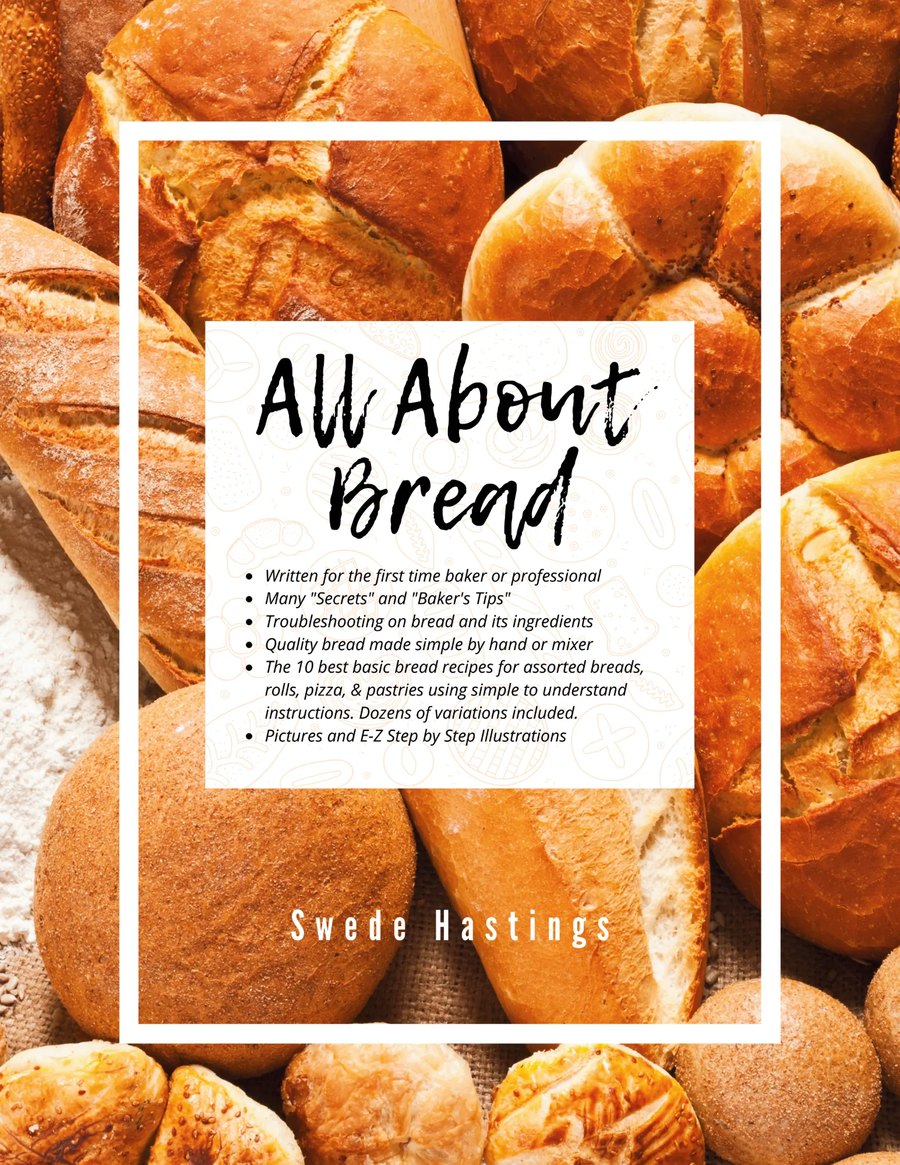
Cover of All About Bread by Swede Hastings: golden loaves and rolls on a floured table, the title in black brush lettering on a white panel Coming soon

Coming soon

All About Bread

by Swede Hastings

  • Written for the first time baker or professional
  • Many "Secrets" and "Baker's Tips"
  • Troubleshooting on bread and its ingredients
  • Quality bread made simple by hand or mixer
  • The 10 best basic bread recipes for assorted breads, rolls, pizza, and pastries using simple to understand instructions, with dozens of variations included
  • Pictures and E-Z step by step illustrations

More titles will go up here as they survive the tea going cold.

Submissions

Send us your book.

Bring it to the table. Tell us what it is, who wrote it, and where we can read it. We read what comes in on Thursday evenings, and if a book is a fit we will write to the email address you give us.

Most presses ask for the same things: a short synopsis, a word count, a bit about you, and a sample or the full manuscript. Share the manuscript as a link (Google Docs, Dropbox or similar) with viewing turned on, rather than an attachment.

We use what you send only to read your submission and reply to you.